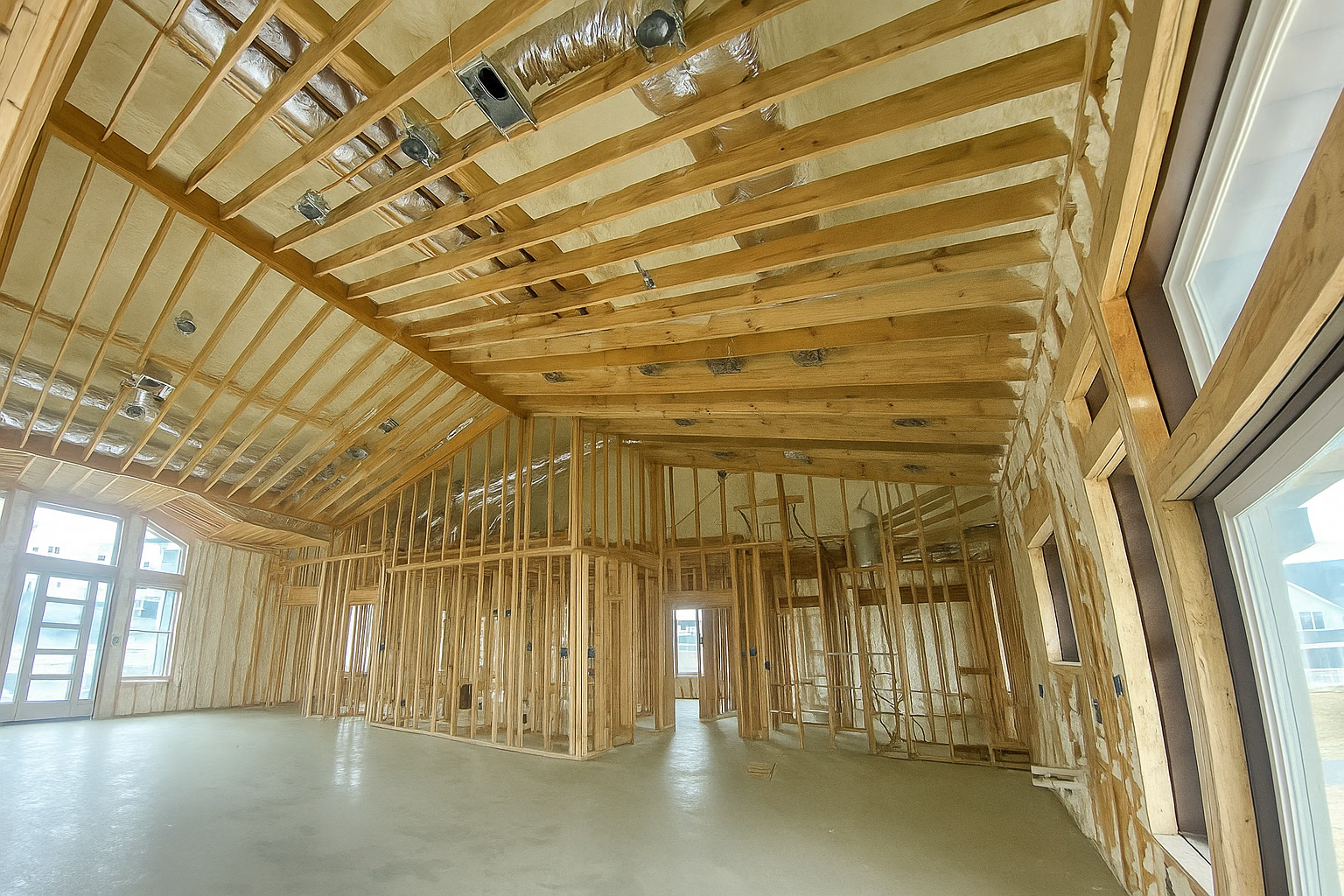
Post-Frame (Pole Barn) vs Cold-Formed Steel Framing
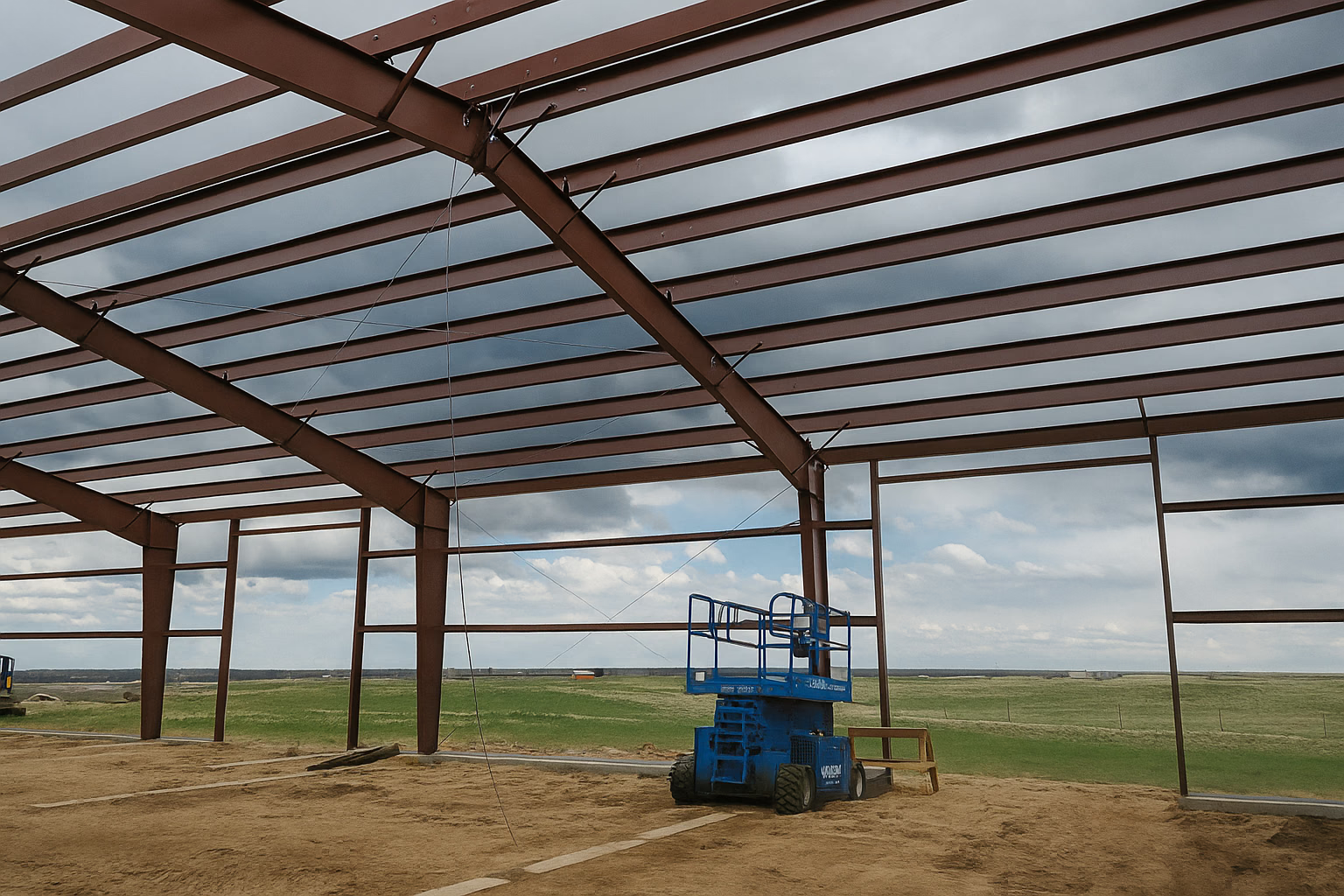
Which One Should You Build With?
If you’re diving into your first barndominium or workshop build, one of the earliest (and toughest) choices you’ll face is what type of framing system to use. The two big contenders are post-frame (pole barn) and cold-formed steel framing. Both methods can support metal siding and roofing, both are durable, and both have proven track records — but they’re very different in how they go together, how they handle insulation, and how they perform long-term.
Let’s break down what each system really offers, how they differ, and which might fit your build, budget, and skill level best.
What Is Post-Frame Construction?
Post-frame (commonly called pole barn construction) is the classic method used in agricultural buildings, workshops, and now — increasingly — barndominiums. It relies on large wooden posts or laminated columns that are either buried directly in the ground or anchored to concrete piers. Horizontal framing members called girts (for walls) and purlins (for the roof) tie everything together.
The metal siding and roofing panels are then screwed directly to these girts and purlins, creating the finished exterior shell.
Why builders love it:
- Fast, simple assembly — great for DIYers.
- Flexible spacing (you can design big open interiors).
- Easy to insulate and finish.
- Cost-effective materials and tools.
Post-frame structures have been around for decades, and with modern metal cladding, they’re surprisingly energy-efficient when properly insulated.
What Is Cold-Formed Steel Framing?
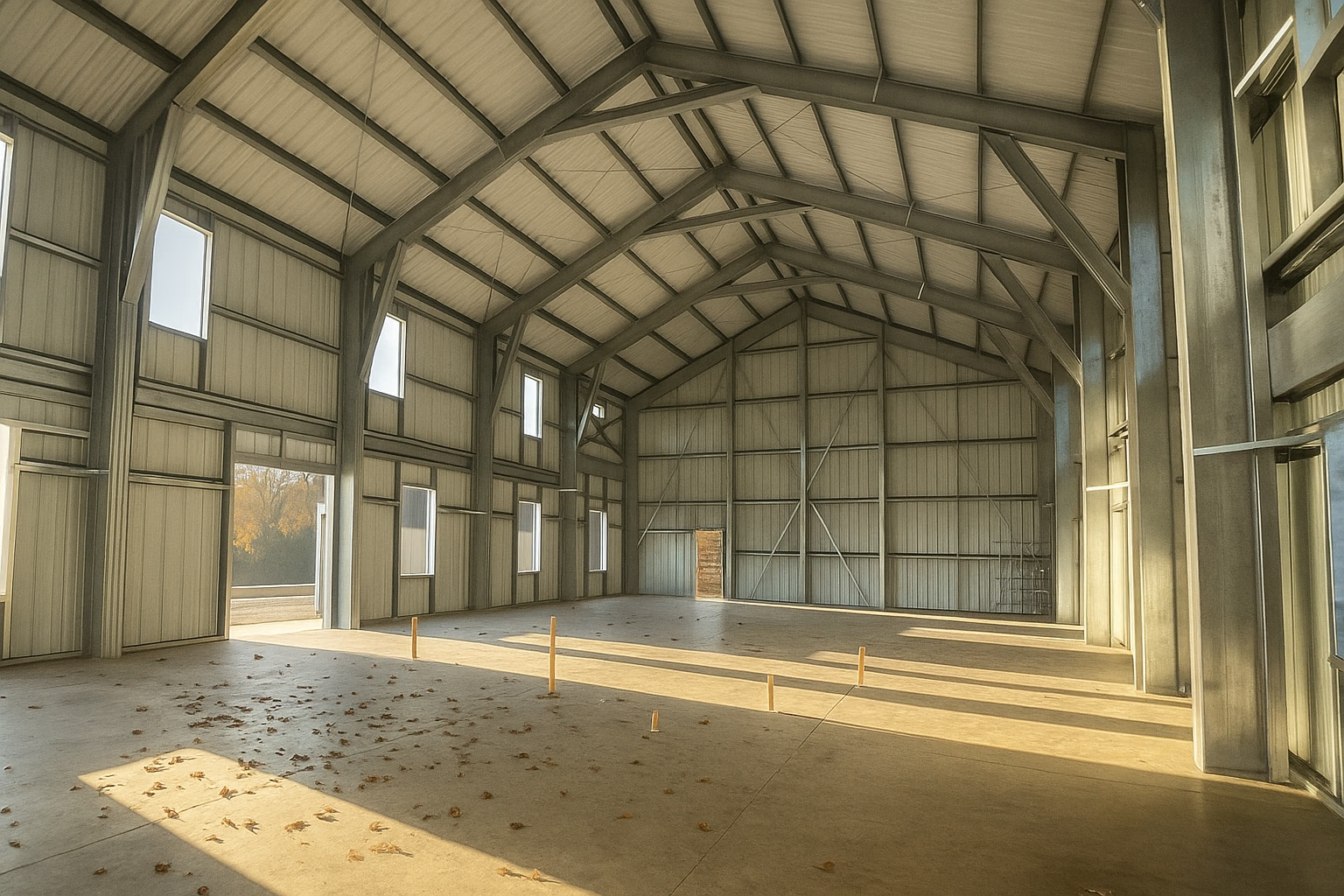
Cold-formed steel framing (CFS) is a newer, more industrial approach to metal buildings. Instead of wood posts, it uses galvanized steel studs and C-channel components that are precision-cut and bolted together. The structure sits on a slab with anchor bolts — no wood, no embedded posts.
You might think of it as a “giant metal stud wall” system. It’s clean, straight, and strong — the kind of framing method used in commercial projects and prefabricated kits.
Why it appeals to builders:
- Completely non-combustible (no risk of rot, termites, or fire damage).
- Extremely consistent dimensions — everything is straight and plumb.
- No treated lumber or embed plates needed.
- Great for high-load or code-sensitive projects.
However, it’s not as beginner-friendly — and the insulation and interior finishing steps can get more complex.
Ease of Construction: Wood Simplicity vs. Steel Precision
If you’re building your own barndo or working with a small crew, post-frame construction wins hands down in terms of ease. Wood posts are forgiving — if a hole is slightly off, you can adjust. Screwing on metal siding is straightforward, and most DIYers already have the tools.
Cold-formed steel, on the other hand, is more like assembling a giant erector set. You’ll be dealing with pre-cut steel members, bolts, and fasteners — and every joint needs to align perfectly. It’s clean and professional, but less flexible if something’s out of square.
Verdict:
✅ Post-frame — Better for DIY and adaptable on-site.
⚙️ Cold-formed steel — Best for precision builds or prefab kits.
Insulation: The Deciding Factor for Comfort
This is where things get interesting — and where many builders make their choice.
Post-Frame Insulation Options
In a traditional post-frame setup, you have open bays between wooden posts and purlins — perfect for:
- Fiberglass batts or rolls (easy to fit between framing)
- Blown-in insulation above ceilings
- Foil-backed radiant barriers directly under metal panels
Many owners attach fiberglass rolls under the steel roof, add blown insulation above the ceiling, and finish the inside with wood strapping or drywall. The natural wood framing gives you flexibility to staple, screw, or attach almost anything.
Cold-Formed Steel Insulation Challenges
Steel framing changes the game. Metal conducts heat and cold, creating thermal bridges that can undo your insulation’s effectiveness. Plus, since the studs are thinner and hollow, it’s harder to fit traditional batts or rolls without compressing them.
You can absolutely insulate a cold-formed steel building, but it often requires:
- A thermal break (like rigid foam board or spray foam on the inside).
- A furring channel system for attaching interior panels.
- Meticulous sealing around fasteners to prevent condensation.
That adds both cost and complexity.
Verdict:
🧱 Post-frame — Easier and cheaper to insulate; supports fiberglass or foam easily.
❄️ Cold-formed steel — More durable but needs specialized insulation setup.
Durability and Maintenance
Here’s where cold-formed steel earns its reputation. Since there’s no wood, there’s nothing to rot, warp, or attract termites. It’s completely inorganic and virtually maintenance-free once sealed. Steel structures can easily outlast wood — especially in humid or pest-prone regions.
That said, treated post-frame wood can also last decades, especially if posts are set above grade using concrete piers or brackets. Modern laminated columns and proper drainage can make wood-framed pole barns extremely long-lived.
Verdict:
🏗 Cold-formed steel — Wins for long-term durability and zero-rot structure.
🌾 Post-frame — Proven track record, especially when properly protected.
Cost and Material Availability
For most people, this is the make-or-break factor.
Post-frame builds remain significantly cheaper to start with. Lumber prices fluctuate, but the materials are common and the tools are simple. You can erect a post-frame shell quickly, saving on labor. And since the system doesn’t require a full concrete foundation (just piers or brackets), you save even more up front.
Cold-formed steel buildings are more expensive per square foot. The framing kits are precise but involve higher manufacturing and shipping costs. They require a concrete slab foundation and careful engineering — but in return, you get a permanent, code-compliant structure that’s often easier to insure and finance in some regions.
Verdict:
💰 Post-frame — Best bang for your buck, especially for DIY.
💼 Cold-formed steel — Higher upfront cost, lower lifetime maintenance.
Interior Finishing and Aesthetics
Another point builders don’t think about until the end: finishing the inside.
With post-frame construction, you can easily attach drywall, shiplap, or wood paneling directly to furring strips. It’s simple and flexible for interior customization.
With cold-formed steel, you’ll likely need to install a furring channel system before hanging drywall, because you can’t screw panels directly into thin steel studs without thermal breaks. This adds time and cost — though the final look can be very clean and modern.
Verdict:
🪚 Post-frame — Easier for rustic or mixed-finish interiors.
🔩 Cold-formed steel — Cleaner look but requires more planning.
Which One’s Right for You?
The best framing system depends on what matters most to you:
| Priority | Choose Post-Frame | Choose Cold-Formed Steel |
| DIY-friendly build | ✅ Yes | ❌ Not ideal |
| Lower cost | ✅ Yes | ❌ Higher upfront |
| Long-term durability | ⚪ Good | ✅ Excellent |
| Easy insulation | ✅ Very easy | ⚪ Requires planning |
| Fire/rot resistance | ⚪ Decent | ✅ Excellent |
| Interior finishing | ✅ Flexible | ⚪ Needs furring system |
For most DIY barndominium builders, post-frame construction remains the go-to choice. It’s faster, cheaper, and more forgiving. You can run insulation between purlins, screw metal siding directly on, and finish the interior however you like.
If, however, you want a fully engineered, precision steel structure that will stand for half a century with almost no maintenance — and you’re fine paying more up front — then cold-formed steel might be worth it. It’s especially attractive for larger commercial buildings or in regions where termites and humidity destroy wood.
Final Thoughts
There’s no one-size-fits-all answer, but there is a right choice for your specific build.
If your goal is a practical, affordable barndominium that you can finish yourself — go post-frame.
If you want a commercial-grade metal structure that’s built to last through anything — cold-formed steel has the edge.
In the end, both systems can support beautiful, efficient metal homes. The real difference comes down to how much control you want over the build — and how much effort you’re willing to put into getting it insulated, sealed, and finished just right.